Queensland Saltwater Fish Identification: A Comprehensive Guide
Camtas Publication offers a valuable fish identification poster‚ detailing 230 species found in Queensland and the Great Barrier Reef region‚ available as a PDF.
Queensland’s diverse marine environment teems with an incredible array of saltwater fish species‚ making accurate identification crucial for both recreational anglers and conservation efforts. The state’s coastline‚ encompassing the Great Barrier Reef and numerous estuaries‚ supports a vibrant ecosystem. Understanding these fish requires reliable resources‚ and readily available Queensland saltwater fish identification charts‚ often in PDF format‚ are essential tools.
These charts showcase the remarkable biodiversity‚ from iconic species like Barramundi and Coral Trout to lesser-known but equally important inhabitants of the reef. Utilizing these guides allows fishers to comply with regulations regarding size and bag limits‚ ensuring sustainable fishing practices. Furthermore‚ accurate identification aids in reporting any potentially illegal fishing activities or the sighting of protected species‚ contributing to the preservation of Queensland’s marine heritage.
Importance of Accurate Fish Identification
Precise fish identification is paramount in Queensland‚ extending beyond simply knowing what you’ve caught. Legal compliance is a key factor; Queensland regulations dictate specific size and bag limits for various species‚ detailed on readily accessible fish identification charts‚ often available as a convenient PDF download. Misidentification can lead to unintentional violations and potential penalties.
Beyond legal aspects‚ accurate identification supports responsible fishing practices and marine conservation. Knowing the species allows anglers to understand their role in the ecosystem and make informed decisions. Charts like those from Camtas Publication provide vital information on habitat‚ breeding habits‚ and even edibility. This knowledge empowers anglers to contribute to the long-term health of Queensland’s valuable saltwater fisheries.
Common Saltwater Fish Species in Queensland
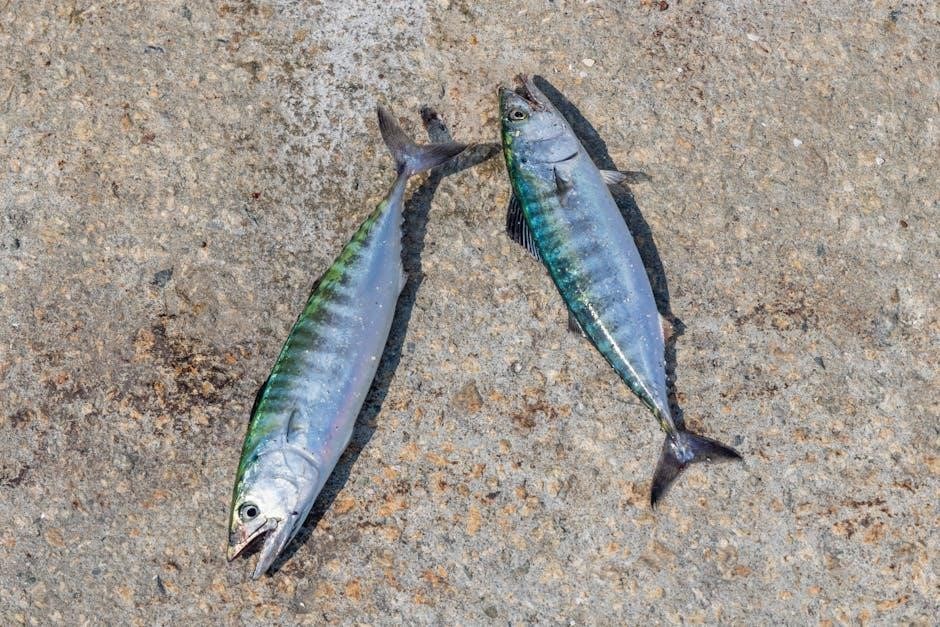
Queensland’s diverse waters host species like Barramundi‚ Coral Trout‚ and Mangrove Jack‚ often illustrated in detailed fish identification charts available as a PDF.
Barramundi (Lates calcarifer)
Barramundi (Lates calcarifer)
Barramundi‚ a highly sought-after sport and table fish‚ are prominently featured in Queensland saltwater fish identification charts‚ often available as downloadable PDF guides. These charts detail key characteristics for accurate identification‚ including their silver to grey coloration‚ large scales‚ and distinctive dorsal fin.
PDF resources typically showcase illustrations aiding in distinguishing Barramundi from similar species. Legal size and bag limits‚ crucial for responsible fishing‚ are also commonly included on these charts. Anglers can utilize these guides to confirm their catch‚ ensuring compliance with Queensland fishing regulations.
The Camtas Publication Fishers Guide and the Queensland Fish ID Guide are excellent sources‚ providing comprehensive information and visual aids for Barramundi identification. These resources help both novice and experienced fishers accurately identify this iconic Queensland species.
Coral Trout (Plectropomus leopardus)
Coral Trout (Plectropomus leopardus)
Coral Trout‚ renowned for its vibrant colors and delicious flavor‚ is a key species detailed in Queensland saltwater fish identification charts‚ frequently accessible as PDF downloads. These charts emphasize identifying features like the distinctive leopard-like spots covering its body and the elongated dorsal fin.
PDF guides often include detailed illustrations to differentiate Coral Trout from similar reef fish. Crucially‚ they display current legal size and bag limits‚ vital for sustainable fishing practices. Anglers rely on these resources to positively identify their catch and adhere to Queensland regulations.
Resources like the Camtas Publication Fishers Guide and the Queensland Fish ID Guide offer comprehensive visual aids and information for Coral Trout identification‚ benefiting both recreational and commercial fishers in Queensland.
Mangrove Jack (Lutjanus argentimaculatus)
Mangrove Jack (Lutjanus argentimaculatus)
The Mangrove Jack‚ a powerful and popular sportfish‚ is prominently featured in Queensland saltwater fish identification charts‚ often available as convenient PDF guides. These charts highlight key characteristics like its robust build‚ bronze-colored body‚ and distinctive dark blotches‚ particularly noticeable on juveniles.
PDF resources emphasize differentiating Mangrove Jack from other similar species‚ such as Trevally‚ through detailed illustrations and descriptions of fin shapes and mouth positioning. Legal size and bag limits are clearly displayed‚ ensuring anglers comply with Queensland fishing regulations.
Guides like the Camtas Publication Fishers Guide and the Queensland Fish ID Guide provide invaluable visual references for accurate Mangrove Jack identification‚ aiding responsible fishing practices throughout Queensland’s waterways.
Golden Snapper (Chrysophrys auratus)
Golden Snapper (Chrysophrys auratus)
Golden Snapper‚ also known as Samson Fish‚ are frequently included in comprehensive Queensland saltwater fish identification charts‚ often accessible as downloadable PDF documents. These charts showcase the fish’s distinctive golden hue‚ particularly vibrant in deeper waters‚ and its powerful‚ streamlined body shape.
PDF guides detail key identification features‚ such as the sloping forehead‚ strong terminal mouth‚ and the absence of scales on the head. They also clearly outline current Queensland size and bag limits‚ crucial for legal and sustainable fishing.
Resources like the Camtas Publication Fishers Guide and the Queensland Fish ID Guide offer detailed illustrations and descriptions‚ assisting anglers in confidently identifying Golden Snapper and adhering to responsible fishing practices.
Sweetlip Emperor (Plectorhinchus spp.)
Sweetlip Emperor (Plectorhinchus spp.)
Sweetlip Emperors are commonly featured in Queensland saltwater fish identification charts‚ readily available in PDF format for convenient field use. These charts highlight the species’ characteristic thick‚ fleshy lips – hence the name – and their generally greyish-pink coloration‚ often with subtle blueish hues.
PDF guides emphasize identifying features like the distinct dark blotch near the gill cover and the moderately sized scales. They also provide crucial information regarding Queensland’s current size and bag limits‚ ensuring compliance with fishing regulations.
Resources such as the Camtas Publication Fishers Guide and the Queensland Fish ID Guide offer detailed illustrations and descriptions‚ aiding anglers in accurate identification and responsible fishing practices when encountering Sweetlip Emperors.
Utilizing Fish Identification Charts & Guides
Queensland anglers benefit from readily accessible PDF charts‚ simplifying fish identification and ensuring adherence to legal size and bag limits.
Understanding Key Identification Features
Queensland saltwater fish identification charts‚ often available as PDF downloads‚ emphasize crucial features for accurate species determination. Body shape and fin arrangement are primary indicators; noting the overall form – elongated‚ compressed‚ or rounded – and the shape‚ size‚ and position of fins aids identification.
Coloration and markings provide further clues‚ with charts detailing patterns like stripes‚ spots‚ or bars unique to each species. Scale patterns‚ though sometimes requiring closer examination‚ can be definitive‚ differentiating between similar-looking fish. These PDF guides frequently include detailed illustrations highlighting these characteristics.
Successfully utilizing these resources requires careful observation and comparison to the chart’s depictions‚ ensuring responsible fishing practices and accurate species reporting within Queensland.
Body Shape and Fin Arrangement
Queensland saltwater fish identification charts‚ frequently found as PDF resources‚ prioritize body shape as a key identifier. Is the fish elongated like a pike‚ laterally compressed like a snapper‚ or more rounded like an emperor? These fundamental forms narrow down possibilities.
Fin arrangement is equally crucial; observe the shape and position of dorsal‚ pectoral‚ pelvic‚ anal‚ and caudal fins. Charts detail how fin characteristics vary between species. For example‚ a long‚ continuous dorsal fin versus a separated one is a significant distinction.
These PDF guides often include diagrams illustrating typical fin arrangements. Careful attention to these details‚ combined with body shape‚ forms a solid foundation for accurate fish identification in Queensland waters.
Coloration and Markings
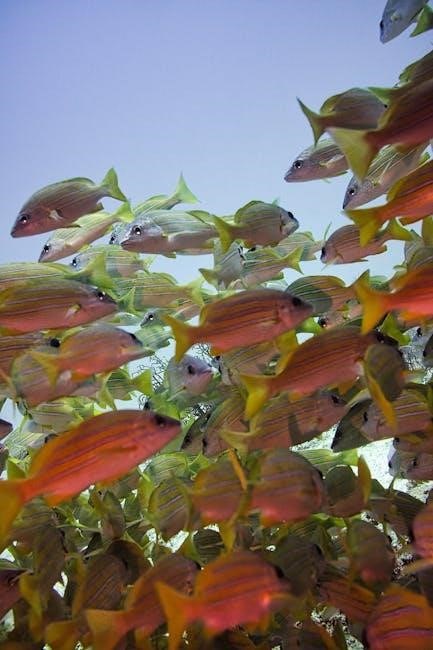
Queensland saltwater fish identification charts‚ often available as a convenient PDF download‚ heavily emphasize coloration and markings. While color can be variable‚ consistent patterns are vital clues. Look for distinct bands‚ spots‚ stripes‚ or blotches.
Many PDF guides highlight how juvenile fish often display different coloration than adults‚ a critical point for accurate identification. Charts detail specific markings – for instance‚ the leopard-like spots of Coral Trout or the prominent black saddle of a Mangrove Jack.
Pay close attention to fin coloration too; are the fins tipped with a contrasting color? These visual cues‚ meticulously illustrated in Queensland fish identification resources‚ significantly aid in species determination.
Scale Patterns
Queensland saltwater fish identification charts‚ frequently found as downloadable PDF documents‚ often include details about scale patterns as a key identification feature. Examining the size‚ shape‚ and arrangement of scales can be surprisingly diagnostic.
Some PDF guides illustrate the ctenoid (rough) versus cycloid (smooth) scale types common in different species. Charts may also depict the lateral line scale count – the number of scales along the side of the fish – a relatively consistent characteristic;
While not always easily visible without close inspection‚ scale patterns‚ alongside other features detailed in Queensland fish identification resources‚ contribute to a more accurate species determination‚ especially when combined with coloration and body shape analysis.
Available Queensland Saltwater Fish Identification Resources
Several resources aid in Queensland saltwater fish identification‚ with many available as convenient PDF downloads. Camtas Publication provides a comprehensive fishers’ guide‚ often accessible in PDF format‚ illustrating over 230 species of the region‚ including both fresh and saltwater varieties.
The definitive “Queensland Fish ID Guide” (book format‚ but information often summarized online in PDF excerpts) offers detailed illustrations‚ descriptions‚ and rigging diagrams. Laminated posters‚ frequently mirroring the content of PDF charts‚ are also popular for quick reference.
Online databases and mobile applications supplement these traditional resources‚ but a downloadable PDF chart provides a reliable‚ offline identification tool for anglers in the field.
Camtas Publication Fishers Guide
The Camtas Publication Fishers Guide to angling species of Queensland and the Great Barrier Reef is a highly regarded resource‚ frequently available as a downloadable PDF. This guide meticulously identifies 230 illustrated freshwater and saltwater fish‚ crustaceans‚ and other marine life.
Its detailed format includes species names‚ bag limits‚ legal sizes‚ preferred habitats‚ and eating qualities‚ making it invaluable for both novice and experienced anglers. The PDF version allows for easy access and portability‚ perfect for use on boats or during shore-based fishing trips.
The large 594 x 840mm size of the original poster translates well to a clear‚ detailed PDF chart‚ aiding accurate fish identification.
Queensland Fish ID Guide (Book)
The Queensland Fish ID Guide is considered the definitive resource for identifying QLD fish species‚ and while primarily a physical book‚ digital versions or scanned PDF excerpts are often sought after by anglers. This comprehensive guide provides accurate fish illustrations alongside detailed descriptions‚ covering a vast range of species found in both freshwater and saltwater environments.
Beyond identification‚ the book includes valuable information on optimal fishing rigs for each species‚ enhancing an angler’s success rate. It’s an invaluable reference for anyone wanting to confidently identify their catch and adhere to legal regulations.
Though a complete PDF may be harder to find legally‚ sections are often shared amongst fishing communities.
Laminated Fish Identification Posters
Camtas Publication produces laminated fish identification posters specifically for the Queensland and Great Barrier Reef region‚ offering a durable and readily accessible resource. These posters visually showcase numerous species‚ including illustrations detailing key identification features‚ legal size limits‚ and bag limits – crucial information for responsible fishing.
While a direct PDF download of the full poster isn’t always available‚ high-resolution images are sometimes shared online by retailers or fishing enthusiasts. The laminated format ensures water resistance‚ making it ideal for use on boats or near the water.
These posters serve as a quick reference guide‚ aiding in accurate species identification during and after a fishing trip.
Legal Considerations for Fishing in Queensland
Fish identification charts‚ like those from Camtas‚ help anglers confirm catches align with QLD’s size and bag limits‚ avoiding legal issues.
Size Limits and Bag Limits
Queensland’s fisheries regulations mandate specific size and bag limits for various saltwater fish species‚ crucial for sustainable stock management. Accurate fish identification‚ aided by resources like the Camtas publication’s PDF chart‚ is paramount for compliance.
Anglers must consult current QLD Department of Agriculture and Fisheries guidelines‚ as limits frequently change. A fish identification guide ensures correct species determination before keeping a catch. Misidentification can lead to unintentionally retaining undersized or over-quota fish‚ resulting in penalties.
The Camtas chart details legal sizes and bag limits alongside species illustrations‚ simplifying adherence to regulations. Regularly updated information is available on the Queensland government’s fisheries website‚ complementing the visual aid provided by the PDF chart. Responsible fishing practices depend on knowing these limits.
Protected and Prohibited Species
Queensland waters host numerous protected and prohibited fish species‚ demanding careful identification by anglers. The Camtas fish identification chart‚ available as a PDF‚ assists in distinguishing these from legal catches. Strict regulations safeguard vulnerable species and maintain ecosystem balance.
Certain species‚ like marine turtles and dugongs‚ receive full protection‚ making any interaction illegal. Others‚ such as some groupers and coral trout‚ have specific protections regarding size‚ catch methods‚ or seasonal closures. Accurate identification‚ using resources like the chart‚ prevents accidental harm or illegal retention.
The Queensland government’s fisheries website provides comprehensive lists of protected species and associated regulations. Utilizing both the PDF chart and official guidelines ensures responsible fishing and contributes to the conservation of Queensland’s marine biodiversity.
Reporting Illegal Fishing Activities
Maintaining the sustainability of Queensland’s fisheries relies on reporting illegal fishing. If you observe activities violating size or bag limits‚ targeting protected species‚ or employing prohibited methods‚ prompt reporting is crucial. A readily accessible fish identification chart‚ like the Camtas PDF version‚ aids in recognizing potentially illegal catches.
Queensland Boating and Fisheries Patrol (QBFP) is the primary contact for reporting. Reports can be made 24/7 via their hotline‚ 132525‚ or online through the QBFP website. Providing detailed information‚ including location‚ vessel description‚ and species involved‚ strengthens investigations.
Confidentiality is assured for reporters. Utilizing resources like the fish identification chart empowers anglers to become active participants in protecting Queensland’s valuable marine resources and ensuring fair access for all.
Digital Resources for Fish Identification
Numerous online databases and mobile apps complement printed guides‚ including PDF charts like those from Camtas‚ for quick Queensland fish identification.
Online Fish Identification Databases
Several online platforms assist with Queensland saltwater fish identification‚ often supplementing traditional PDF charts. While a dedicated‚ comprehensive online database mirroring a detailed chart isn’t universally available‚ resources like FishBase and the Australian Museum’s online collection provide species information. These databases allow users to search by characteristics – shape‚ color‚ fin arrangement – aiding in narrowing down possibilities.
However‚ for a readily accessible‚ visually-driven experience akin to a laminated chart or PDF guide‚ the Camtas publication’s digital representation is particularly useful. It showcases illustrated species‚ legal sizes‚ and habitat details. These resources‚ combined with careful observation‚ empower anglers and enthusiasts to accurately identify their catch‚ contributing to sustainable fishing practices and responsible marine stewardship within Queensland’s diverse ecosystems.
Mobile Applications for Fish ID
Numerous mobile applications are emerging as convenient alternatives to traditional Queensland saltwater fish identification charts and PDF guides. These apps often leverage image recognition technology‚ allowing users to photograph a catch and receive potential species matches. While accuracy varies‚ they provide a quick initial assessment in the field. Some apps incorporate data from FishBase and other reputable databases‚ enhancing reliability.
However‚ it’s crucial to cross-reference app suggestions with established resources like the Queensland Fish ID Guide or Camtas publication’s digital chart (often available as a PDF). Mobile apps are best used as a supplementary tool‚ not a definitive source. Responsible anglers should always confirm identifications using multiple sources to ensure compliance with size and bag limits‚ promoting sustainable fishing practices within Queensland’s marine environments.
Creating Your Own Identification Chart
Personalized charts‚ built from PDF resources like Camtas’ guide‚ enhance learning; photograph catches and document key features for future Queensland fish ID.
Photographing Your Catch
Documenting your Queensland saltwater fish is crucial when building a personal identification chart‚ especially utilizing resources like a QLD saltwater fish identification chart PDF. Ensure clear‚ well-lit photos showcasing key features. Capture multiple angles – dorsal‚ lateral‚ and ventral views – to highlight body shape and fin arrangements.
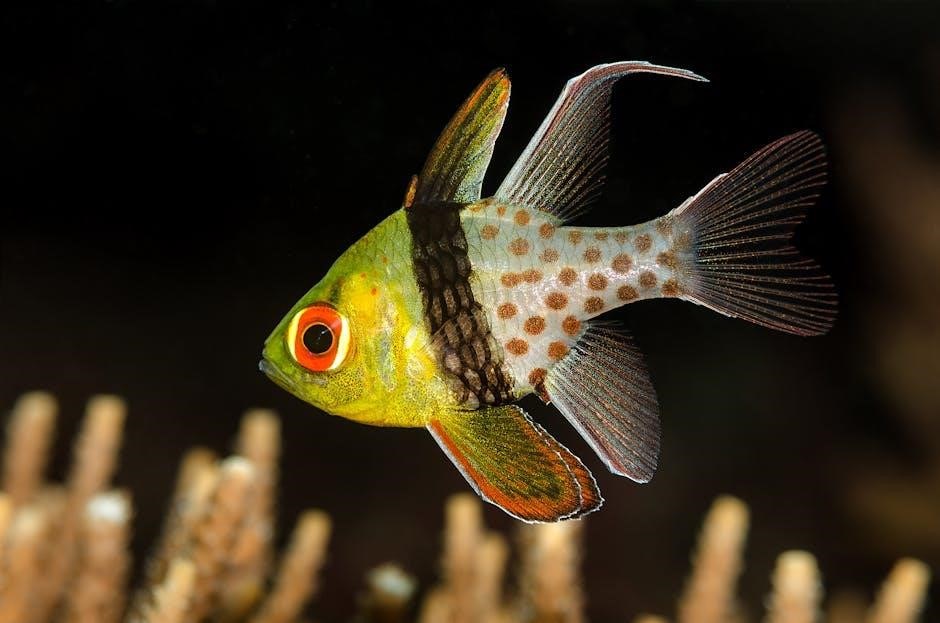
Include a scale or common object in the image for size reference‚ aiding in comparison with PDF guide size limits. Focus on distinctive markings‚ coloration patterns‚ and scale details. High-resolution images are preferable for zooming in on intricate characteristics.
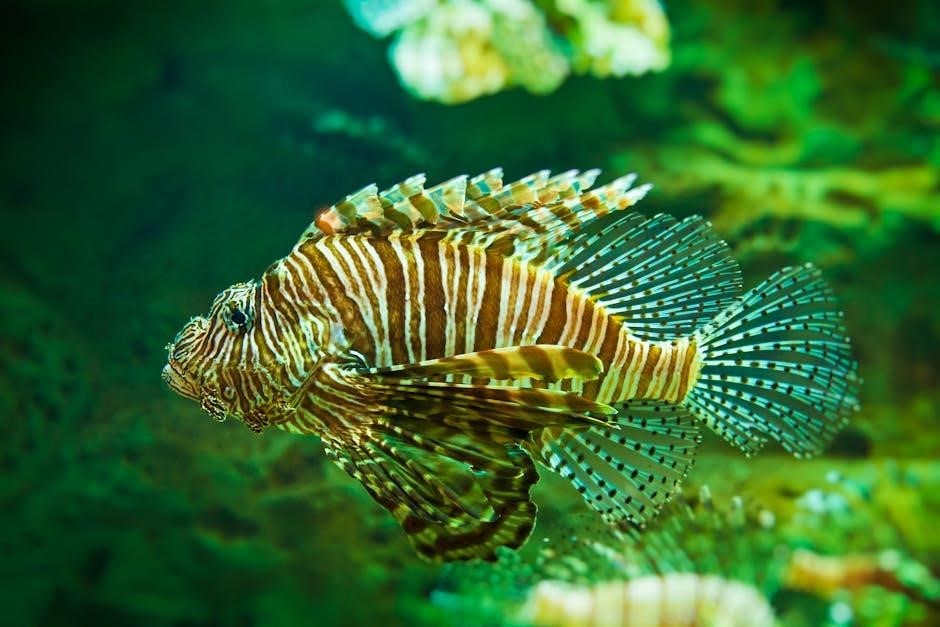
Consider photographing the fish alongside a measuring tape to accurately record its length. These detailed photographs‚ combined with notes‚ will form the foundation of your customized fish ID resource‚ supplementing existing PDF guides.
Documenting Key Characteristics
Alongside photographs‚ meticulous note-taking is vital when creating your personalized fish identification chart‚ especially when referencing a QLD saltwater fish identification chart PDF. Record precise details about body shape – elongated‚ compressed‚ or rounded – and fin arrangements‚ noting any unique features.
Document coloration and markings thoroughly; describe patterns‚ spots‚ stripes‚ and any color variations. Note scale patterns – large‚ small‚ cycloid‚ or ctenoid – as these are significant identifiers.
Record the location and habitat where the fish was caught‚ as this can narrow down possibilities when using your PDF guide. Include measurements like length and weight. Cross-referencing these detailed observations with a reliable PDF resource ensures accurate identification.
Cross-Referencing with Existing Guides
After documenting your catch’s characteristics‚ rigorously cross-reference your observations with established Queensland saltwater fish identification resources‚ particularly a detailed QLD saltwater fish identification chart PDF. Compare your notes against illustrations and descriptions in the guide‚ paying close attention to key features like fin arrangements and scale patterns.
Utilize multiple sources – the Camtas publication‚ the Queensland Fish ID Guide (book)‚ and online databases – to confirm your identification. Discrepancies should prompt further investigation.
Remember that variations can occur within species; a PDF chart provides a visual reference‚ but detailed descriptions are crucial for accurate confirmation. Consistent cross-referencing builds confidence and expertise.