Understanding how robots navigate or drones hold altitude relies on precise distance tools – often unseen‚ yet fundamentally crucial for modern technology and applications․
The Importance of Accurate Measurement
Accurate distance measurement is paramount across diverse fields‚ impacting safety‚ efficiency‚ and reliability․ In construction and engineering‚ precise measurements prevent costly errors and ensure structural integrity․ Navigation systems‚ from personal GPS devices to large-scale mapping projects‚ depend on accurate data for effective route planning and positioning․
Robotics and automation necessitate precise distance sensing for obstacle avoidance‚ manipulation‚ and coordinated movement․ Even seemingly simple tasks‚ like a drone maintaining altitude‚ rely on accurate readings․ Furthermore‚ data center efficiency relies on precise measurements‚ moving beyond guesswork to informed decisions․ Ultimately‚ reliable measurements underpin innovation and progress in countless applications․
Historical Methods of Distance Measurement
Historically‚ distance measurement relied on rudimentary yet ingenious techniques․ Early civilizations employed pacing – counting steps – and using body parts as units of length․ Rulers and measuring tapes‚ evolving from simple marked lines to standardized metal strips‚ provided more precise‚ albeit manual‚ methods․
Odometers‚ initially wheel-based devices tracking rotations‚ offered a mechanical approach to measuring travel distance․ These early tools‚ while limited in accuracy and convenience‚ laid the groundwork for modern technologies․ The need for improved precision spurred ongoing innovation‚ eventually leading to the development of electronic and advanced distance measurement systems we utilize today‚ building upon centuries of practical experience․

Tools for Measuring Distance: A Comprehensive Guide
From traditional tapes to cutting-edge LiDAR‚ a diverse array of tools empowers accurate distance measurement across various fields and applications today․

Traditional Measuring Tools
Historically‚ distance measurement relied on manual methods and relatively simple tools․ Rulers and measuring tapes remain foundational‚ providing direct linear measurements for shorter distances․ These tools are inexpensive‚ readily available‚ and require no power source‚ making them suitable for basic tasks․ However‚ they are prone to errors due to parallax‚ stretching‚ or sagging of the tape‚ and are impractical for long distances․
Odometers and pacing offered solutions for larger areas․ Odometers‚ originally mechanical devices attached to vehicles‚ measured distance traveled by counting wheel rotations․ Pacing‚ a more rudimentary technique‚ involved counting steps‚ with each step representing an estimated distance․ While useful for approximate measurements‚ both methods lacked the precision of modern tools and were susceptible to inaccuracies based on stride length or terrain variations․
Rulers and Measuring Tapes
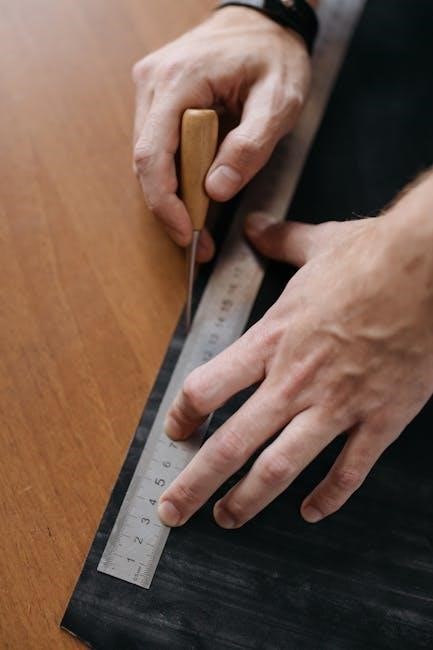
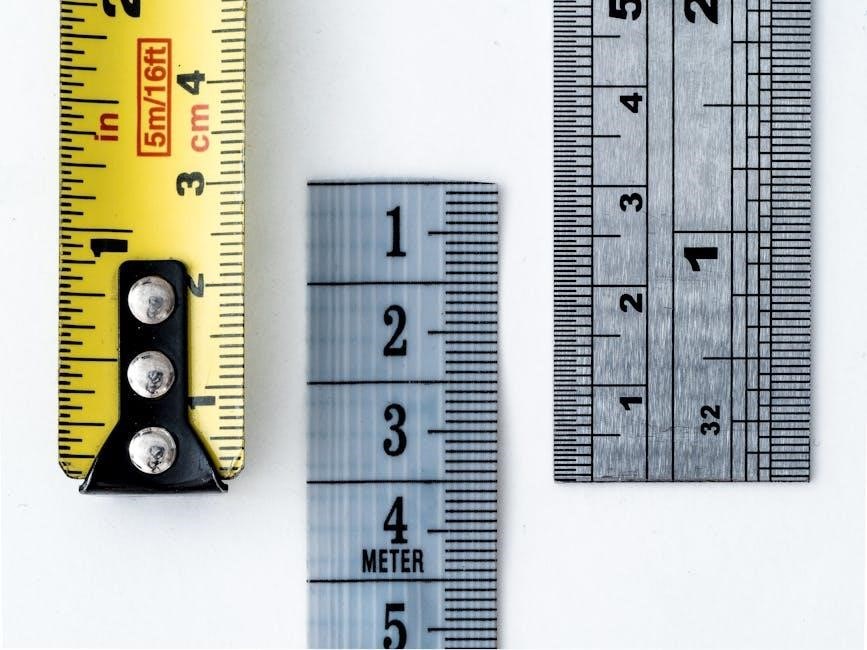
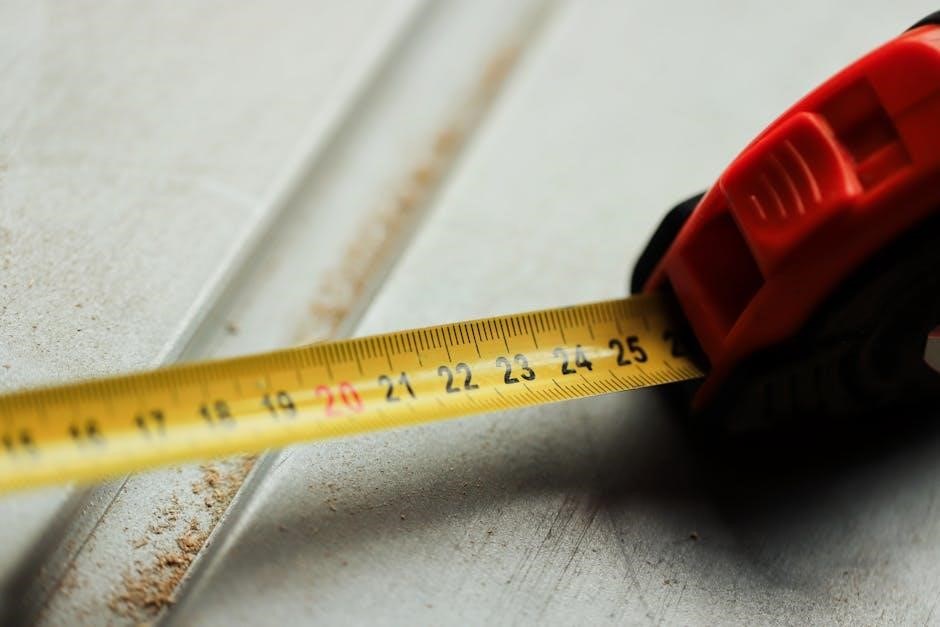
Rulers and measuring tapes represent the most basic‚ yet enduring‚ tools for distance measurement․ Rulers‚ typically used for shorter lengths‚ offer precise measurements in inches‚ centimeters‚ or millimeters․ Measuring tapes extend this capability to longer distances‚ often featuring markings in both imperial and metric units․ Their simplicity and affordability make them ubiquitous in homes‚ workshops‚ and construction sites․
However‚ accuracy depends heavily on proper usage․ Parallax error – the apparent shift in position due to viewing angle – can introduce inaccuracies․ Measuring tapes can stretch or sag‚ especially over longer spans‚ leading to further errors․ Careful attention to alignment and tension is crucial for reliable results․ Despite these limitations‚ they remain essential for fundamental measurement tasks․
Odometers and Pacing
Historically‚ odometers and pacing provided methods for measuring distance‚ particularly over extended terrains․ An odometer‚ originally a mechanical device attached to vehicles‚ tallied rotations of wheels to calculate traveled distance․ Modern odometers are digital and integrated into vehicle systems‚ offering greater precision․ Pacing‚ a more rudimentary technique‚ involves counting steps while walking a known distance to establish a personal pace length․
Accuracy with pacing is highly variable‚ dependent on stride consistency and terrain․ Odometers‚ while more reliable‚ require calibration and are susceptible to errors from tire wear or pressure changes․ Both methods were crucial before electronic distance measurement‚ and pacing remains a useful backup or estimation tool in situations lacking advanced technology․
Modern Electronic Distance Measurement (EDM) Tools
Electronic Distance Measurement (EDM) revolutionized distance measurement‚ offering significantly improved accuracy and efficiency compared to traditional methods․ These tools utilize electromagnetic waves to determine the distance between two points․ EDM systems encompass a range of technologies‚ including laser distance meters‚ ultrasonic distance sensors‚ and radar distance sensors‚ each suited for different applications and environments․
Laser distance meters are popular for their precision and long range‚ while ultrasonic sensors are cost-effective for shorter distances․ Radar excels in challenging weather conditions․ The advent of EDM has dramatically impacted fields like surveying‚ construction‚ and robotics‚ enabling precise data collection and automated processes․
Laser Distance Meters
Laser distance meters‚ also known as laser rangefinders‚ employ a laser beam to accurately measure the distance to a target․ They operate on the principle of Time-of-Flight (ToF)‚ calculating distance based on the time it takes for the laser light to travel to the object and return․ These devices are renowned for their precision‚ typically achieving accuracies within millimeters‚ and their ability to measure relatively long distances – often exceeding 100 meters․
Laser meters are widely used in construction‚ real estate‚ and surveying due to their portability and ease of use․ Many models offer additional features like area and volume calculations‚ enhancing their versatility․
Ultrasonic Distance Sensors
Ultrasonic distance sensors utilize sound waves to determine the distance to an object․ They emit ultrasonic pulses and measure the time it takes for the echoes to return‚ calculating distance based on the speed of sound․ These sensors are cost-effective and well-suited for short-range measurements‚ typically up to a few meters․
Unlike laser sensors‚ ultrasonics are less affected by the target’s surface color or texture․ However‚ they can be influenced by temperature‚ humidity‚ and air currents‚ potentially impacting accuracy․ They find applications in robotics‚ automotive parking assistance‚ and liquid level sensing․
Radar Distance Sensors
Radar distance sensors employ radio waves to measure distance‚ functioning similarly to ultrasonic sensors but utilizing a different part of the electromagnetic spectrum․ They transmit radio signals and analyze the reflected waves to determine the distance to an object․ Radar excels in challenging conditions‚ like fog‚ dust‚ or darkness‚ where optical sensors struggle․
These sensors are commonly used in automotive applications – adaptive cruise control and collision avoidance systems – and in industrial settings for level measurement and object detection․ While generally more expensive than ultrasonic sensors‚ radar offers greater range and robustness in adverse environments․
Advanced Distance Measurement Technologies
Modern advancements have yielded sophisticated distance measurement technologies‚ pushing the boundaries of accuracy and application․ LiDAR (Light Detection and Ranging) utilizes laser light pulses to create detailed 3D maps of surroundings‚ crucial for autonomous vehicles and surveying․ GPS and GNSS (Global Navigation Satellite Systems) leverage satellite signals for global positioning‚ enabling navigation and mapping on a large scale․
Furthermore‚ Total Stations and Theodolites combine electronic distance measurement with angular measurement‚ providing precise positioning data for construction‚ engineering‚ and land surveying․ These technologies represent a significant leap beyond traditional methods‚ offering unparalleled precision and efficiency․
LiDAR (Light Detection and Ranging)
LiDAR technology revolutionizes distance measurement by employing laser light pulses to meticulously map environments in three dimensions․ It functions by emitting laser beams and analyzing the time it takes for the light to return‚ calculating distances with exceptional precision․ This creates dense point clouds representing the scanned area‚ enabling detailed modeling of surfaces and objects․
Applications are vast‚ ranging from autonomous vehicle navigation and forestry mapping to archaeological surveys and atmospheric monitoring․ LiDAR’s ability to penetrate vegetation and generate accurate terrain models makes it invaluable in diverse fields‚ offering a level of detail unattainable with traditional methods․

GPS (Global Positioning System) and GNSS (Global Navigation Satellite System)
GPS‚ and its broader counterpart GNSS‚ utilize a constellation of satellites orbiting Earth to determine precise locations․ These systems calculate distances based on the time it takes for signals to travel from multiple satellites to a receiver․ By trilateration – using distances from several satellites – a receiver can pinpoint its latitude‚ longitude‚ and altitude․

While not direct distance measurement in the same way as laser or ultrasonic tools‚ GPS/GNSS provides positional data crucial for calculating distances between points․ This is fundamental for navigation‚ mapping‚ surveying‚ and tracking applications‚ offering global coverage and relatively high accuracy․
Total Stations and Theodolites
Total stations represent a significant advancement over traditional theodolites‚ integrating electronic distance measurement (EDM) capabilities with angle measurement․ Theodolites primarily measure horizontal and vertical angles‚ requiring separate distance measurements․ Total stations‚ however‚ combine both functionalities into a single instrument‚ streamlining surveying and mapping processes․
They operate by emitting an electromagnetic signal – often infrared or laser – to a prism reflector․ The instrument calculates distance based on the signal’s travel time and angle measurements are recorded digitally․ This provides highly accurate 3D coordinates‚ essential for construction‚ land surveying‚ and precise spatial data collection․

Applications of Distance Measurement
Distance measurement tools are vital across diverse fields‚ including construction‚ navigation‚ robotics‚ and automation‚ enabling precise control and spatial understanding․
Construction and Engineering
In construction and engineering‚ accurate distance measurement is absolutely paramount for successful project completion․ From initial site surveys and land mapping to laying foundations and erecting structures‚ precise measurements dictate everything․ Tools like laser distance meters‚ total stations‚ and even traditional tapes are employed to ensure structural integrity and adherence to blueprints․
Efficiently measuring data center efficiency also requires the right tools‚ not guesswork‚ highlighting the importance of precision․ Engineers rely on these measurements for material estimations‚ quantity takeoffs‚ and quality control‚ minimizing errors and costly rework․ Furthermore‚ monitoring structural deformation and settlement over time necessitates consistent‚ accurate distance tracking‚ safeguarding long-term stability and safety․
Navigation and Mapping
Distance measurement is foundational to both navigation and mapping technologies․ Historically‚ methods like pacing and odometry were used‚ but modern systems heavily rely on GPS‚ GNSS‚ and LiDAR․ These technologies enable the creation of detailed maps‚ accurate positioning‚ and efficient route planning for various applications․
Whether guiding ships at sea‚ airplanes in the sky‚ or vehicles on land‚ precise distance data is critical․ Mapping benefits from LiDAR’s ability to create high-resolution 3D models of terrain‚ while GPS provides global positioning information․ Understanding how a robot navigates a cluttered room also depends on these tools․ These advancements have revolutionized cartography and spatial awareness․
Robotics and Automation
In robotics and automation‚ accurate distance measurement is paramount for safe and efficient operation․ Robots utilize sensors – like ultrasonic‚ laser‚ and LiDAR – to perceive their environment and navigate obstacles․ These tools allow for precise movements‚ object manipulation‚ and collision avoidance‚ crucial for tasks ranging from manufacturing to exploration․
Automated systems‚ such as self-driving cars‚ depend heavily on these technologies for real-time decision-making․ Understanding how a robot navigates a cluttered room hinges on its ability to accurately measure distances․ Furthermore‚ distance data is vital for robotic arm control‚ assembly line precision‚ and warehouse logistics‚ driving increased productivity and reliability․

Factors Affecting Measurement Accuracy
Environmental conditions and proper calibration significantly impact measurement precision; temperature‚ humidity‚ and consistent maintenance are vital for reliable results․
Environmental Conditions
External factors profoundly influence the accuracy of distance measurements․ Temperature fluctuations can cause expansion or contraction in measuring tapes and even affect the speed of sound in ultrasonic sensors‚ leading to errors․ Humidity impacts laser beams‚ potentially scattering or absorbing the light‚ diminishing signal strength and precision․
Atmospheric pressure variations also play a role‚ particularly in longer-range measurements․ Wind can introduce instability in some systems‚ while precipitation like rain or snow can obstruct signals․ Even air density affects laser and radar technologies․ Therefore‚ understanding and accounting for these environmental variables is crucial for obtaining reliable and accurate distance readings in diverse conditions․
Calibration and Maintenance
Regular calibration is paramount for maintaining the accuracy of any distance measurement tool․ Drift can occur over time due to wear and tear‚ temperature changes‚ or physical shocks․ Periodic checks against known standards are essential to identify and correct any deviations․
Maintenance routines should include cleaning lenses and sensors‚ inspecting cables for damage‚ and verifying battery life; For electronic devices‚ software updates can improve performance and address bugs․ Proper storage is also vital – protecting tools from dust‚ moisture‚ and extreme temperatures․ Consistent calibration and diligent maintenance ensure reliable and precise measurements‚ minimizing errors and maximizing the lifespan of the equipment․